
Night Gallery on Rembrandt
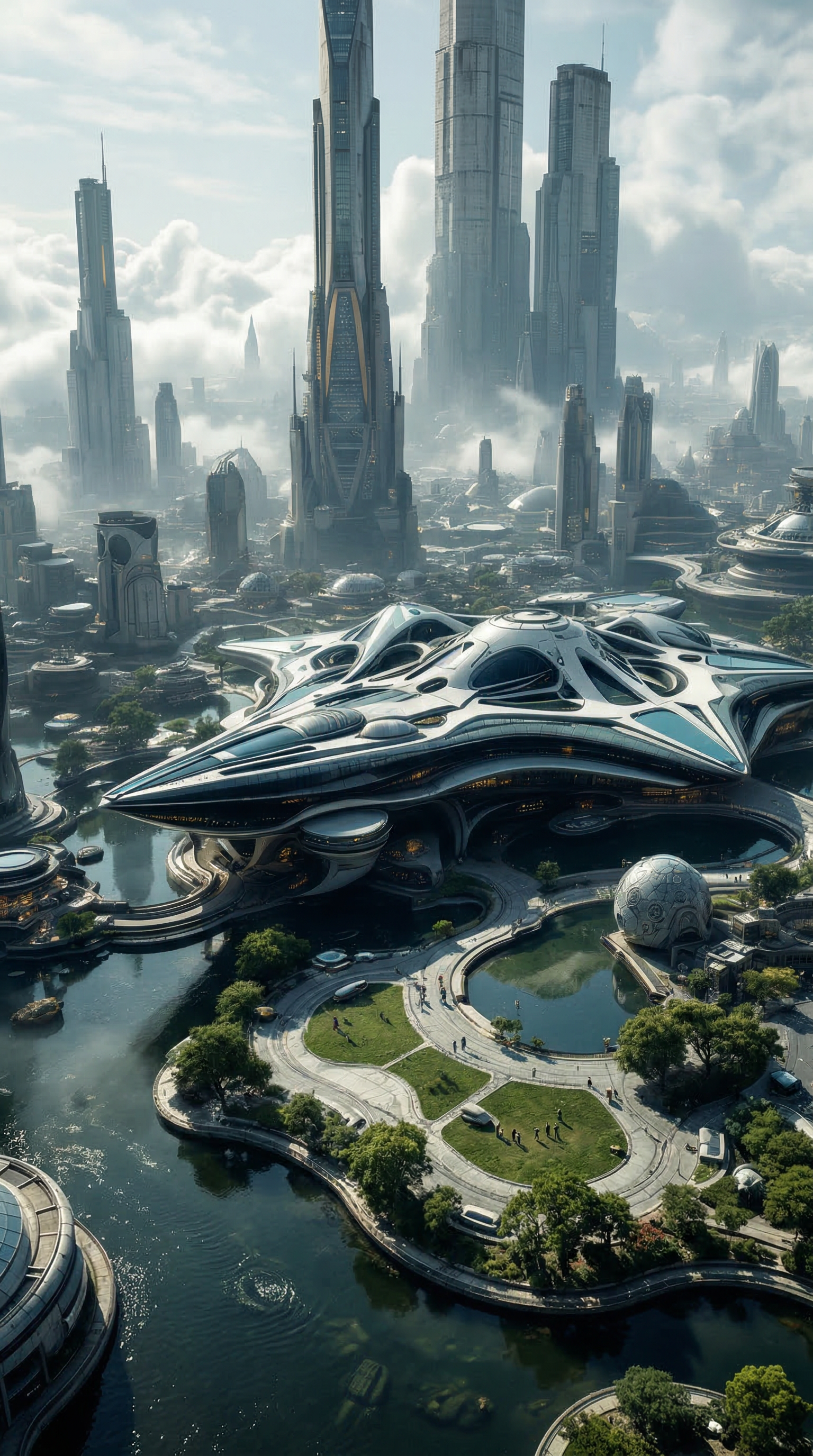
Day 4: The Cold Museum
Rembrandt was once a harsh corporate colony. You can still see the bones of that history if you know where to look—in the climate-control towers hidden behind public gardens, in the old freight rails turned into pedestrian galleries, in the way the museums are never far from the infrastructure that paid for them.
Now people come here for exhibitions, universities, and the kind of cultural seriousness that makes other worlds feel hurried by comparison. I arrived for a weeklong installation exchange from New Liberty, expecting polite curators, overfunded galleries, and citizens determined to remind me that beauty can be administered. I was not entirely wrong.
What I did not expect was how honest the place feels after dark.
Day 6: Power Failure Exhibit
The show everyone is talking about occupies an old maintenance hall in the southern arts district. Universium once used the structure to manage environmental loads during the final terraforming phase. Now it houses moving light sculptures, archival sound, and a floor of reclaimed glass underlit to resemble thin ice. The centerpiece is a timed blackout: every forty minutes the room loses all visible light, and hidden speakers play fragments of early colony diaries over the darkness.
No dramatization. No actors. Just voices from the years when Rembrandt still doubted whether it wanted to belong to human civilization at all.
When the lights returned, no one in the hall spoke immediately. That silence was part of the exhibition too, though the curators were too disciplined to admit it.
Day 7: Art After Industry
Rembrandt fascinates because it refuses the Terran habit of pretending culture and industry are separate species of achievement. The galleries here exist because the world was first made livable by engineering, capital, and ugly perseverance. Rather than erase that history, Rembrandt turns it into aesthetic raw material. Old pump housings become sculpture plinths. Survey maps become woven installations. Mining chants become chamber music. Even the public squares feel designed to say: yes, this was once difficult, and yes, that difficulty remains part of the beauty.
In New Liberty, art often celebrates scale. On Rembrandt, it celebrates conversion—cold into light, labor into memory, infrastructure into meaning.
I could stay another month and still not finish listening.
— Curatorial Journal of Jessa Rowe, Interworld Arts Exchange, Rembrandt