
Orbital Mechanic’s Report
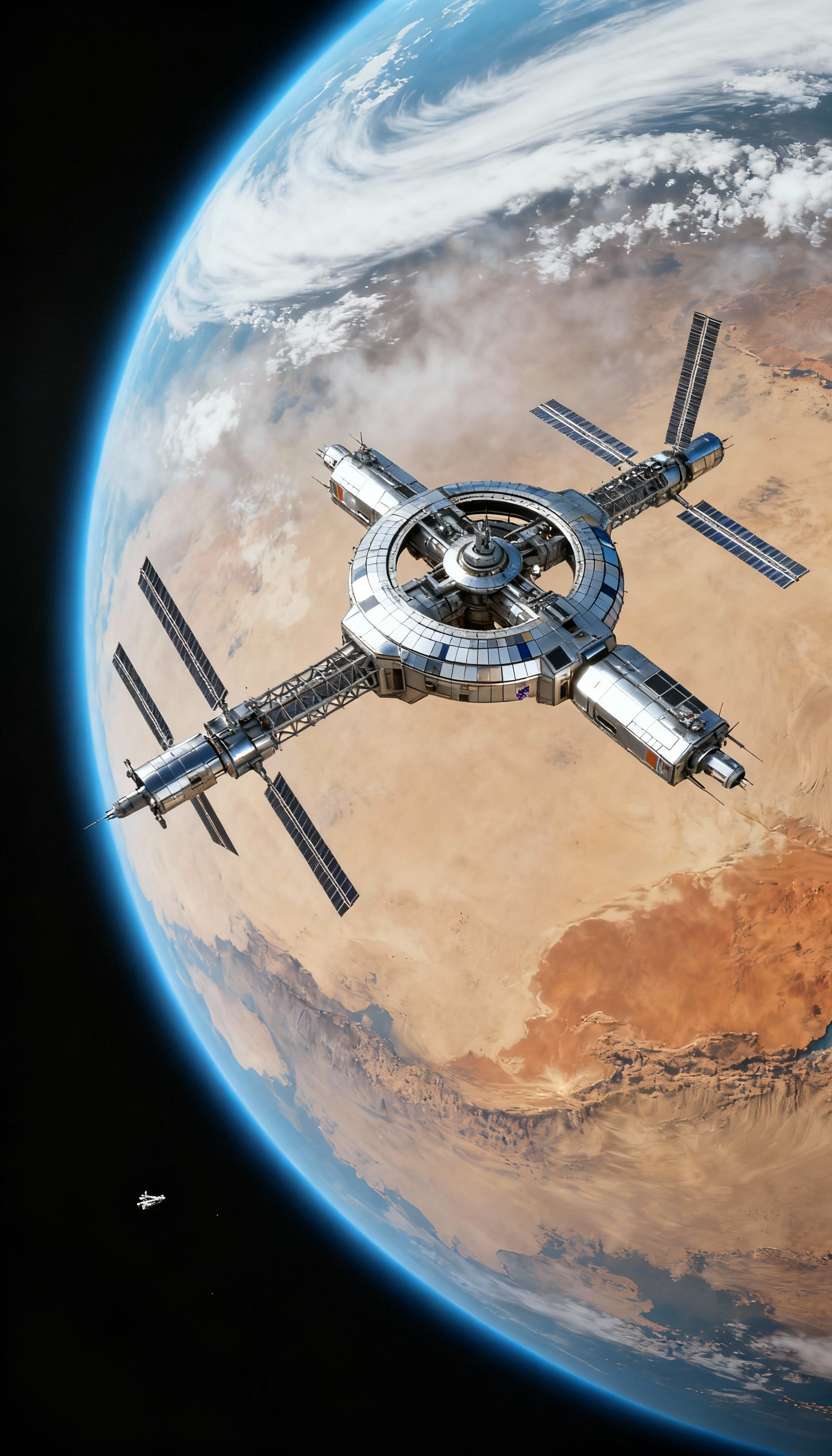
Day 1: Welcome Back to the Grind
My six-month rotation aboard Delta Horizon began today, and the station feels exactly as I remembered it—vast, cold, and perpetually one systems failure away from real trouble. My bunk somehow seems smaller than before, and the food printer in the galley had already started misbehaving before I finished my first shift. It felt like an appropriate welcome.
The work itself was routine: maintenance on the oxygen recycling arrays, mostly recalibrations and diagnostic sweeps. Nothing critical, at least not yet. The manifolds in Section B3 are beginning to show their age, though. I flagged them for replacement, fully aware that with the current supply delays the request will probably sit ignored until something finally breaks hard enough to force the issue.
I spent part of the evening at the observation port. Pace filled the view below us, its blue and green oceans shimmering beneath broad cloud bands. From orbit, it looks calm enough to make you forget how thin the margin of life really is when everything keeping you alive is held together by machinery, maintenance schedules, and vacuum-rated seals.
Day 3: A Wrench in the Works
Halfway through shift, Docking Bay Six threw a pressure-drop alert on one of the fuel transfer lines. A micrometeorite had punctured an external pipe. The automated systems sealed the section before we lost too much helium-3, but only just. Close calls always feel routine afterward. They never feel routine in the moment.
The repair required an EVA. I have logged enough spacewalks by now to know they never become comfortable, no matter how experienced you get. You step outside the lock and find yourself hanging in silence with a planet below, stars beyond, and nothing between your body and oblivion but a suit, a tether, and your own discipline. Even so, there is a strange peace to it—an emptiness so complete it almost settles the mind.
The damage turned out to be minor: a clean puncture, a few stress cracks, and shielding that needed replacement. We patched it with a quick weld and fresh panels and brought the line back online. Still, as I drifted there beside the hull, I could not shake the thought of how fragile this station really is. One larger impact, one failed response, and Delta Horizon could come apart faster than anyone inside it would have time to understand.
Day 5: The Supply Problem
We are running low on too many critical components for anyone’s comfort—power couplings, coolant filters, circuit boards, and the kind of small replacement parts people on planets rarely think about because things simply work until they don’t. The last shuttle up from Pace was delayed again, pinned down by high-altitude storms. Command insists it will arrive within forty-eight hours. Until then, we do what orbital mechanics have always done: patch, improvise, and hope nothing fails in the wrong order.
The coolant system for the reactor core worries me most. It remains stable, but the backup pumps are pushing the end of their service cycle. If one of those goes down before the shuttle arrives, core temperature will rise fast enough to turn a manageable problem into a station-wide emergency.
Dinner was rehydrated vegetable stew. Again. If someone does not recalibrate the galley printer’s flavor settings soon, morale may collapse before the station does.
Day 6: Crisis Averted
The alarms started before breakfast.
A small coolant leak in the reactor system escalated before we could isolate the line. Temperature readings climbed almost immediately, and for a few ugly minutes I was certain we were watching the start of a containment failure. The deck vibration was strong enough that no one could dismiss it as nerves or imagination.
Three of us went into the reactor housing and spent the next hour tracing the leak through a maze of heat, noise, and half-flooded access channels. We found the source in a failed secondary pump. By then the maintenance hatch was already slick with coolant. We sealed the breach with a spare valve assembly and rerouted the flow long enough to stabilize the core, but the station has been running at reduced reactor efficiency ever since.
Once the adrenaline burned off, all that was left was exhaustion, ringing ears, and the chemical sting of coolant fumes clinging to my skin and hair. Reactor emergencies leave a kind of fatigue behind that simulators never capture. I would be content never seeing another one.
Day 8: Life Between the Bolts
Today was calm, which on Delta Horizon counts as a gift. No major alerts, no emergency work orders, no systems trying to come apart under our feet. I spent most of my shift in hydroponics repairing a faulty water-filtration line. The plants there are the only real green on the entire station, and it is easy to forget how much of our breathing depends on them until you are elbow-deep in the machinery that keeps them alive.
Crew morale is holding together, though tension rises quickly whenever supplies get thin. Tonight’s zero-gravity soccer match in the recreation module helped bleed some of that off. I even managed to score once, though my celebration ended with me slamming sideways into a bulkhead hard enough to bruise my shoulder. Worth it.
Day 10: The Shuttle Arrives
Relief finally docked this morning.
The shuttle from Pace came in clean, and the whole station seemed to breathe out at once. We had the replacement coolant pumps installed before midday, restoring the reactor to full capacity. I had forgotten how reassuring the core sounds at proper resonance—steady, even, and strong enough to make the deck feel dependable again.
The shipment brought more than just technical relief. We received fresh food packs, replacement tools, overdue personal items, and, to my genuine surprise, coffee. Real coffee. I claimed a bag before the officers could strip the crate. Life in orbit teaches you to appreciate the scale of small victories.
Day 12: The Quiet Moments
Some days disappear into routine so completely that you barely remember them by the time the next shift begins. But the quiet moments endure.
After work, I stood alone on the observation deck and watched Pace turning beneath us, its atmosphere glowing softly in the sunlight. From up here, storms and oceans look less like weather systems and more like brushstrokes across a living canvas. It is the kind of view that makes maintenance work feel both impossibly small and absolutely essential at the same time.
Life aboard Delta Horizon is relentless. There is no glamour in it, no frontier romance worth speaking of. It is calibration, repair, inspection, replacement—an endless cycle of work that keeps two hundred people breathing, warm, and alive above a world that cannot help them if the station fails. That is enough for me. There is pride in holding the line between order and vacuum.
End Log
Location: Delta Horizon Station, Orbiting Planet Pace
Position: Senior Mechanic, Deck Twelve Maintenance Division
Technician ID: Vance Ortega
Log Period: Week One of Rotation