
The Beacon
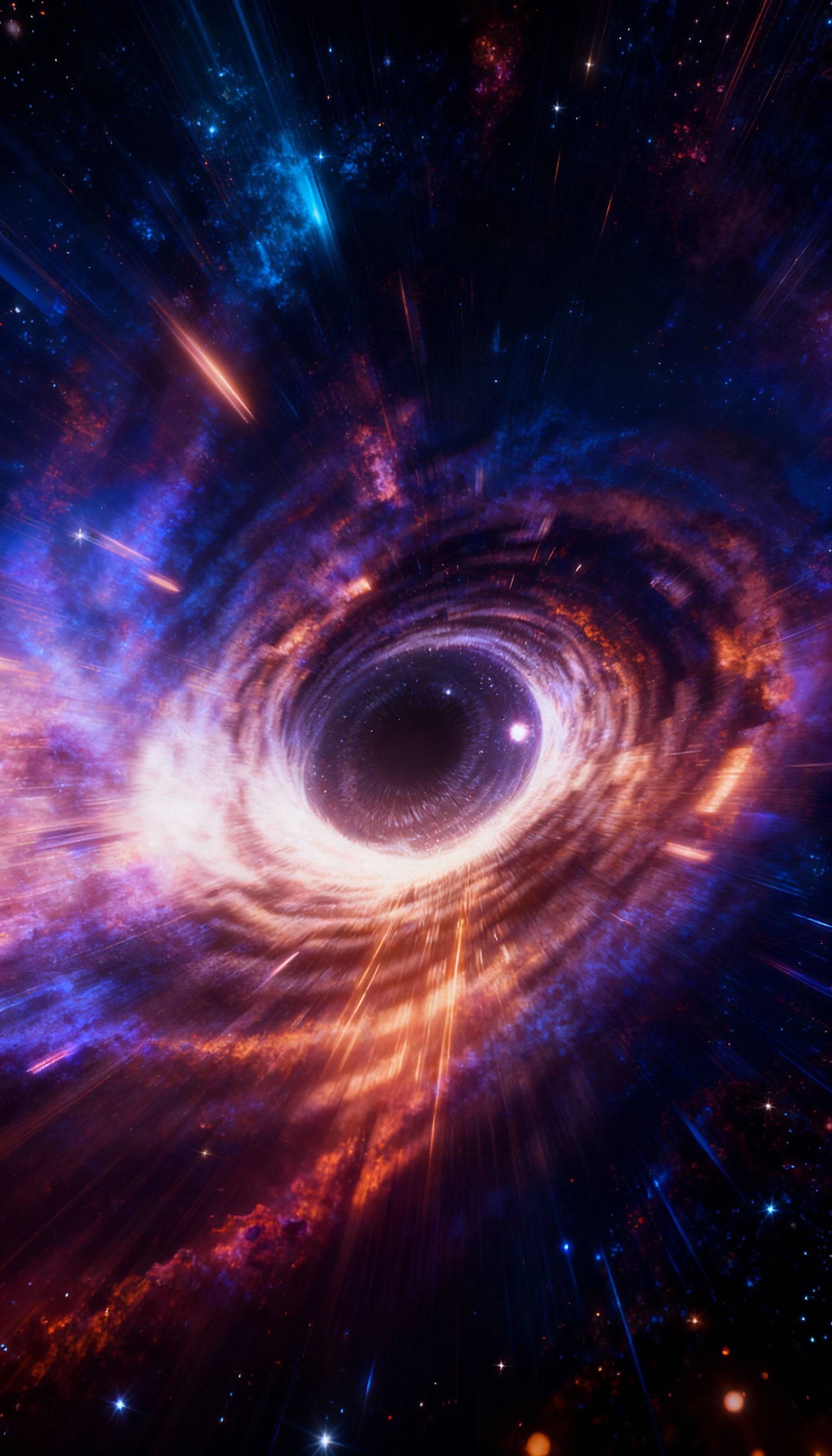
Day 1: Embarking into the Unknown
Today we crossed the boundary into uncharted space. Beyond this point lies nothing familiar—no settled lanes, no mapped worlds, no human presence to mark the dark. The crew carries that knowledge in different ways. Some are restless, some exhilarated, and some quieter than usual, but all of us understand the weight of this mission. We are the first vessel ever to push beyond the Alpha Centauri system.
The USS Pathfinder moves through the void with the steady assurance of a living thing. Her engines pulse through the hull in a measured rhythm, a mechanical heartbeat that seems to follow us wherever we go. I have spent my career operating within the relative certainty of Sol and Alpha Centauri, but standing on this bridge now, with nothing ahead but the black, I feel something I have not felt in years: pure, unguarded pride. Our orders are simple—chart the unknown, survey new worlds, and identify sites for future exploration—but the meaning behind them is far larger. We are not just traveling outward. We are extending the reach of human history into a darkness no one has ever entered before.
Day 12: First Encounter
Today we found our first true anomaly.
Dr. Barker initially described it as a nebular formation, though even he sounded unconvinced by the term. What appeared beyond the forward viewport was unlike anything in the existing record—an immense field of shifting light, violet and electric blue folding through one another in slow, luminous currents. It seemed less like a cloud and more like a living presence suspended in the void. The bridge was washed in its glow, every console and face caught in colors that felt at once beautiful and deeply unnatural.
Sensor returns showed unstable gravitational fluctuations and a low, continuous vibration that traveled through the ship’s frame. Several members of the bridge crew swore they could feel it through the deck plating, not simply as motion, but as a pulse. I ordered us closer. The closer we moved, the stronger the sensation became. Dr. Barker believes it may be some form of natural energy field. I want to accept that explanation, but there is something about the phenomenon that resists being reduced to data. Space should be silent. This place did not feel silent. It felt aware.
Day 27: Lost Signals
The isolation is beginning to settle over the crew in ways no training scenario can fully prepare you for. Deep space exerts a particular kind of pressure—not physical, but psychological. The silence accumulates. The distances become harder to comprehend. Even routine system checks begin to carry an undertone of urgency, as though discipline alone can hold back the enormity pressing against the hull.
This morning we lost contact with Fleet Command. Every diagnostic on the communications array came back nominal, yet every channel returned only static. Dr. Rao suggested interference from a nearby planetary magnetic field, and under normal circumstances I might have accepted that immediately. Out here, however, the silence feels different. It does not feel accidental. It feels imposed, as though something beyond our instruments has reached across the dark and cut us loose from everything behind us.
Day 34: The Forgotten Planet
Our long-range sensors picked up a planet in orbit around a dying star—an unrecorded world adrift in the dim light of a sun nearing collapse. From orbit it looked barren, gray, and exhausted, its surface marked by canyons and immense plains of broken stone. At first glance, it appeared lifeless. Then the data began to come in.
There were faint atmospheric traces. Mineral layering suggested ancient hydrological activity. More striking still were indications—subtle, fragmented, but unmistakable—of a biosphere long vanished. The world was dead, but it had not always been so.
Standing on the bridge, watching that empty sphere turn beneath us, I felt something I have difficulty naming. It was not fear exactly, nor was it sorrow. It was the weight of implication. This had once been a living place. Now it drifted alone around a failing star, a monument to extinction written in ash and stone. The science team requested a deeper survey. I delayed the decision. There are worlds that invite study, and there are worlds that feel like warnings.
Day 48: The Signal
Several days into our continued survey, we detected a transmission.
At first it was almost indistinguishable from background noise, a faint irregularity buried beneath system chatter. Over time it resolved into a clear, repeating pattern—steady, deliberate, and unmistakably structured. It matched no known human transmission architecture. It bore no resemblance to any beacon, fleet marker, or distress code in the database. Its source lay far beyond our intended route, light-years from any charted outpost or recognized sphere of activity.
The science division believes the signal is artificial, possibly some form of automated distress call. That should have made the decision simple, but the truth is none of us needed convincing. We did not come this far to turn away from mystery. I ordered an immediate course adjustment. No one argued. Whether the transmission leads to discovery, danger, or some relic drifting forgotten in deep space, this is precisely why the Pathfinder was sent beyond the frontier. Some signals are too important not to follow.
Day 60: Into the Rift
The source has led us into a region no telescope in charted space ever identified. It appears to be a vast rift saturated with dark matter, an expanse so dense it consumes nearly all visible light. The boundary alone is difficult to describe. It is not emptiness, but an active absence, a region where every sensor return arrives fractured, distorted, or incomplete.
We entered at minimal speed, adjusting course in increments so fine the helm crew might as well have been threading a needle through gravity itself. Inside, the atmosphere aboard ship changed immediately. Even the sound of the engines seemed dampened, as though the rift absorbed more than light. System disruptions spread across multiple decks. Gravity fluctuated in shallow waves. The signal, meanwhile, grew stronger, deepening into something less like a transmission and more like a pulse. It filled every channel, every frequency, every silence between spoken words.
There is a point on certain missions when withdrawal remains possible in theory but no longer in practice. We crossed that point today.
Day 72: The Beacon
At the center of the rift, we found it.
A colossal structure hung suspended in the darkness, so vast that for several seconds no one on the bridge seemed able to process its scale. Floodlamps swept across its surface and caught on immense carved geometries that shimmered as though the material itself were alive with buried light. Energy moved through it in slow, radiant waves, each pulse perfectly synchronized with the signal that had guided us here.
We named it The Beacon.
Dr. Rao believes it was constructed by an intelligent species that predates humanity by millions of years. I do not know whether that estimate is correct, but standing before it, I understood one thing with absolute certainty: this object was not debris, not accident, and not ruin in the ordinary sense. It was built to endure. Its surrounding gravitational field shifted constantly, almost defensively, as though the structure were protecting itself—or waiting to see whether we were worthy to approach.
The crew stood in silence before their stations, faces pale in the display glow. The fear that had followed us into the rift did not disappear, but it changed. Awe took its place. For the first time in my life, I understood why earlier explorers sometimes described the void in spiritual terms. We had entered the deep dark expecting emptiness and instead found evidence of design, intention, and a history older than our species had ever imagined. We are not the first to have crossed beneath these stars. We are only the most recent.
Day 80: The Return
After several days of observation, I ordered our withdrawal from the rift. Even at a distance, the Beacon’s signal continued to reach us—a faint, rhythmic echo pulsing through the dark like a final summons, or perhaps a farewell. The crew has grown quieter with every passing shift. No one says much unless duty requires it. I understand that silence. Some discoveries resist immediate language.
I feel relief in leaving, but not comfort. Part of me is already reaching backward toward that impossible structure, wanting one more look, one more pass through its shadow, one more chance to stand before something so ancient that it makes the whole of human civilization feel newly born. Home is pulling at us now, but so is the Beacon. I suspect that pull will remain with me for the rest of my life.
Day 82: The Coverup Begins
Communications were restored shortly after we returned to the outer survey lanes. I transmitted a full report to Fleet Command, including sensor archives, visual captures, field notes, and Dr. Rao’s provisional analysis. Within hours, the response came back.
The data was sealed. Our mission was officially terminated. All discussion of the Beacon and the rift was prohibited under direct command authority.
The crew understood the order, but understanding does not make it easier to live with. Silence aboard ship feels heavier now than it ever did within the rift itself. We found something that should have changed the human understanding of the universe, and somewhere above us—behind desks, behind classifications, behind whatever fear drives institutions to bury truth—someone decided it was not to be spoken of. That decision frightens me almost as much as the Beacon did.
Day 118: Nothing There Was Seen
Weeks have passed since our return, yet I still feel the Beacon in ways I cannot explain. At times it seems less like memory and more like a presence, as though some part of me never truly left that region of dark matter and ancient design. We went searching for answers and returned instead with a deeper, more disquieting set of questions. Perhaps that is the real nature of exploration. The farther one travels, the less certain the universe becomes.
Some time later, a colleague attached to the follow-on expedition confided in me that when they returned to the coordinates, there was nothing there. No structure. No signal. No trace of the Beacon at all.
I think about that often.
Something, or someone, knows we are moving through the dark—charting it, naming it, mistaking our first steps for mastery. I do not know what the Beacon was built for. I do not know who buried it in that rift or why it vanished after we found it. I know only this: we are not alone in the long history of the stars, and whatever waits out there has already begun to notice us.
Captain Elias Kade, USS Pathfinder