




Roosevelt
Introduction
Roosevelt, a thriving American frontier colony in the Gliese 687 system, embodies the pioneering spirit of exploration and opportunity. Once a remote outpost settled by a handful of families, it has grown into a prosperous society built on resilience, innovation, and a sense of purpose. Roosevelt stands as a shining example of American determination to establish life and prosperity far beyond Earth’s reach.
Geography and Environment
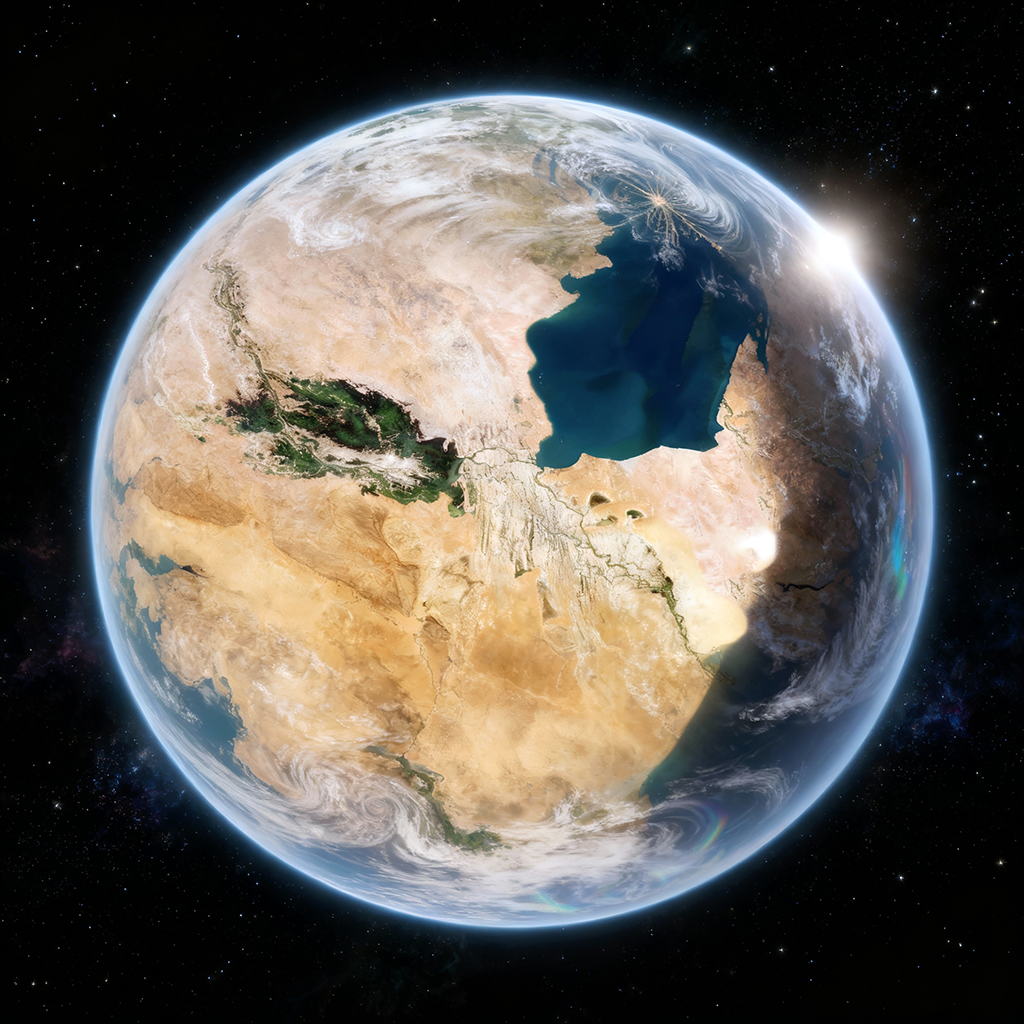
Roosevelt’s landscape is characterized by dramatic contrasts — vast deserts and rocky uplands dominate the majority of the planet, while fertile equatorial regions sustain life and agriculture. The most defining feature is an immense inland sea in the northern hemisphere, surrounded by semi-arid plains and nourished by seasonal rivers that transform the region during brief wet cycles.
The planet has a radius of 5,280 kilometers and a gravity of 0.83G, with a breathable atmosphere of 0.79 atm. Its mean temperature of 252K (-21°C) creates a generally cold climate with harsh winters and mild summers centered near the equatorial belts. Water and ice cover 42.68% of the surface, concentrated in inland seas, wetlands, and subterranean aquifers. These green equatorial zones are the lifeblood of the planet’s ecosystems and human settlements.
Biodiversity
Roosevelt’s ecosystems are sparse but biologically unique. Equatorial wetlands host lush vegetation adapted to seasonal flooding and drought, while deserts and uplands support hardy flora and fauna capable of enduring extreme temperature shifts. Aquatic ecosystems thrive within the inland seas, sustaining rich fisheries and diverse species crucial to local economies.
Over forty thousand species of plants and animals have been identified, with over three thousand incorporated into local diets. Roosevelt is one of the largest exporters of natural food products in the American frontier, shipping nutrient-rich fruits, vegetables, and exotic meats throughout the Gliese 687 system.
Colonization and Society
The first settlers of Roosevelt arrived seeking a fresh start, carving out lives in a harsh but promising land. The population has since grown to 254,700, spread across a network of cities and rural communities. The capital, Concord, houses 12,000 residents and reflects a deliberate homage to Victorian architecture—cobblestone streets, ornate facades, and lush public squares provide old-world charm amid a frontier world.
Beyond Concord, settlements range from agricultural communities to bustling coastal towns, linked by efficient transport routes. Despite distances, a strong communal ethos unites Roosevelt’s inhabitants, blending frontier pragmatism with civic pride and cultural depth.
Economy and Industry
Roosevelt’s economy thrives on natural resources and sustainable agriculture. Its exports of organic and indigenous foods serve both domestic and off-world markets, establishing the planet as a vital supplier within the American frontier. Alongside agriculture, a growing tourism industry showcases Roosevelt’s distinctive character and natural beauty.
Popular destinations include the Blue Shore Aquapark, a tropical oasis set within the cool climate; the Hassan Shopping District, famed for artisan goods and imported luxuries; and the National Museum of Humanity, chronicling humanity’s journey from Earth to the stars. These attractions draw over five million visitors annually, bolstering both economic and cultural vitality.
Culture and Lifestyle
Life on Roosevelt is defined by self-reliance, craftsmanship, and community. Settlers have embraced the planet’s challenges, turning adversity into creativity. The people are renowned for their artisanal industries—fine textiles, handmade furniture, and culinary craftsmanship inspired by both Earth and local ingredients.
Cultural celebrations fuse American heritage with planetary traditions, fostering unity and pride. Festivals, fairs, and communal gatherings celebrate both the rugged beauty of Roosevelt and the ingenuity of its people, ensuring a vibrant and enduring cultural identity.
Conclusion
Roosevelt represents the enduring American ideal of exploration and progress. From its Victorian-styled capital to its thriving agricultural exports and growing tourism sector, it stands as a testament to what can be achieved through perseverance and imagination. In every respect, Roosevelt remains a symbol of humanity’s capacity to flourish in the most distant corners of the galaxy.