




Americana

Introduction and Founding
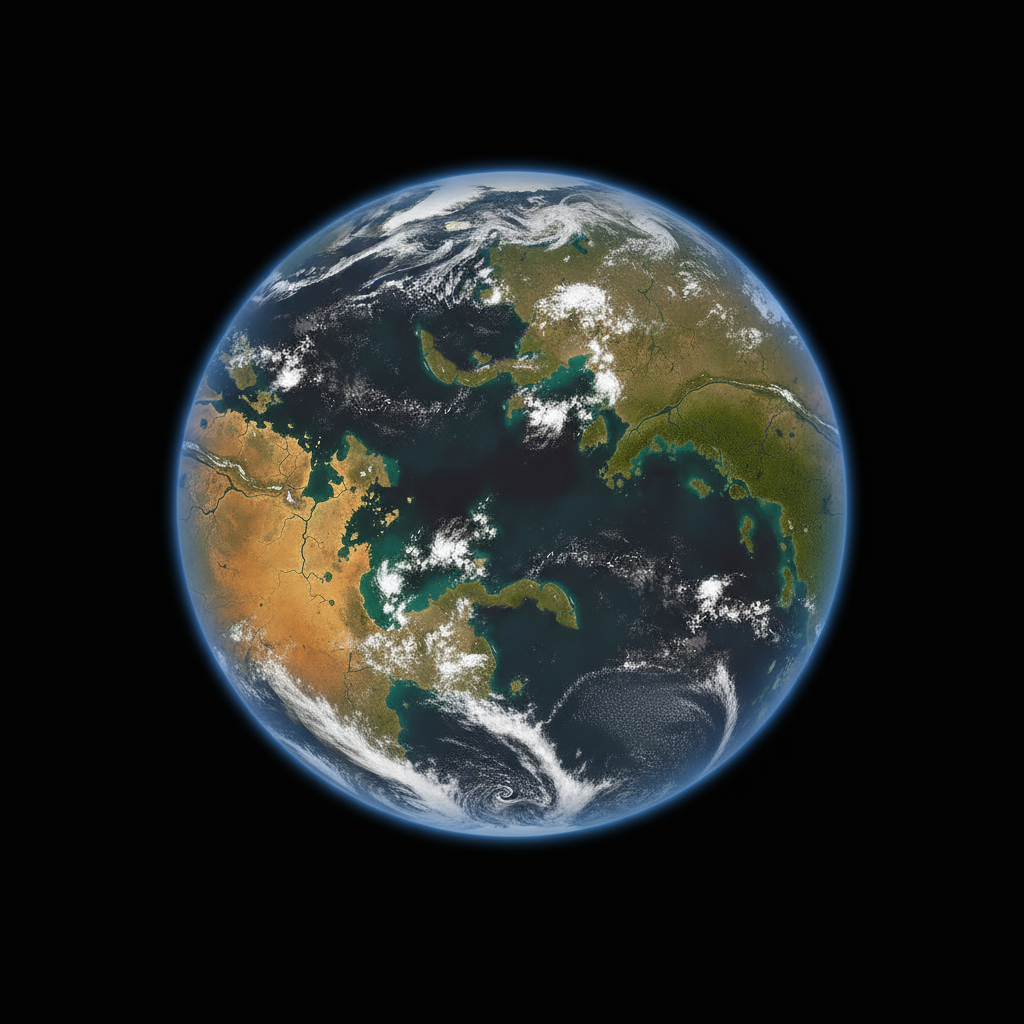
Americana represents a historic milestone as the first independent American colony established outside of the Solar System (SolSys). Situated on a habitable planet chosen after extensive probe missions, the colony marks the beginning of humanity’s ventures beyond the familiar confines of Earth’s celestial neighborhood. The first colonists endured a six-year voyage to reach this new world, confident that their destination was verified as suitable for human life through rigorous exploration and testing.
The capital city, New Columbia, lies along the western shores of the Dagger Tooth Straits — the site of the first landing. Today, it thrives as a bustling metropolis of innovation and enterprise, linking Americana’s founding ideals with its modern prosperity.
Geography and Environment
Americana’s landmass mirrors Earth in scale and diversity. Fertile eastern forests and humid deltas contrast sharply with the arid plateaus and savannas of the west. Eighteen major cities and countless townships span these landscapes, each adapted to regional conditions.
Climate: Temperate to semi-arid, slightly cooler than Earth’s mid-latitudes. Western plateaus are dry and windswept, while the eastern basins experience heavy rainfall and dense forestation. The combination of wide climatic zones has encouraged both agrarian and industrial development.
Water Systems: An extensive network of rivers, deltas, and inland seas dominates Americana’s geography. These waterways sustain their population and economy, serving as natural trade corridors between settlements.
Urban Development and Transportation
Americana’s eighteen cities are linked by electronic highways and maglev lines that enable rapid intercity transport. Airfields and shuttleports dot the coasts, maintaining constant traffic with orbit and neighboring colonies. The colony’s transportation systems reflect its emphasis on sustainability — electric vehicles, shared vehicle networks, and solar railways reduce emissions and reinforce communal efficiency.
Communications and Connectivity
Every major settlement maintains full wireless, interplanetary, and extra-solar network coverage. Transit corridors provide signal continuity for travelers across undeveloped regions, while emergency planetary communicators are mandatory in frontier zones — ensuring safety even in the remotest terrain.
Population and Land Distribution
Home to 30 million residents across a landmass comparable to the continental United States, Americana maintains growth through tightly regulated immigration, limited to 10,000 new arrivals annually by the U.S. State Department. Each family receives land grants of ten acres near a city or three around a township, encouraging steady, sustainable settlement.
Cultural and Social Landscape
Americana’s culture fuses traditional American values — democracy, innovation, and community — with frontier pragmatism. Festivals, public events, and educational initiatives reinforce civic unity. The colony’s universities collaborate with Terran institutions on ecological, biological, and technological research, ensuring that knowledge flows freely between worlds.
Conclusion
Americana stands as the enduring symbol of the American pioneering spirit — a self-sustaining world of balance between progress and preservation. As the first independent American colony beyond SolSys, it embodies the triumph of exploration, disciplined growth, and cultural continuity across the stars.