




Harmony

Introduction
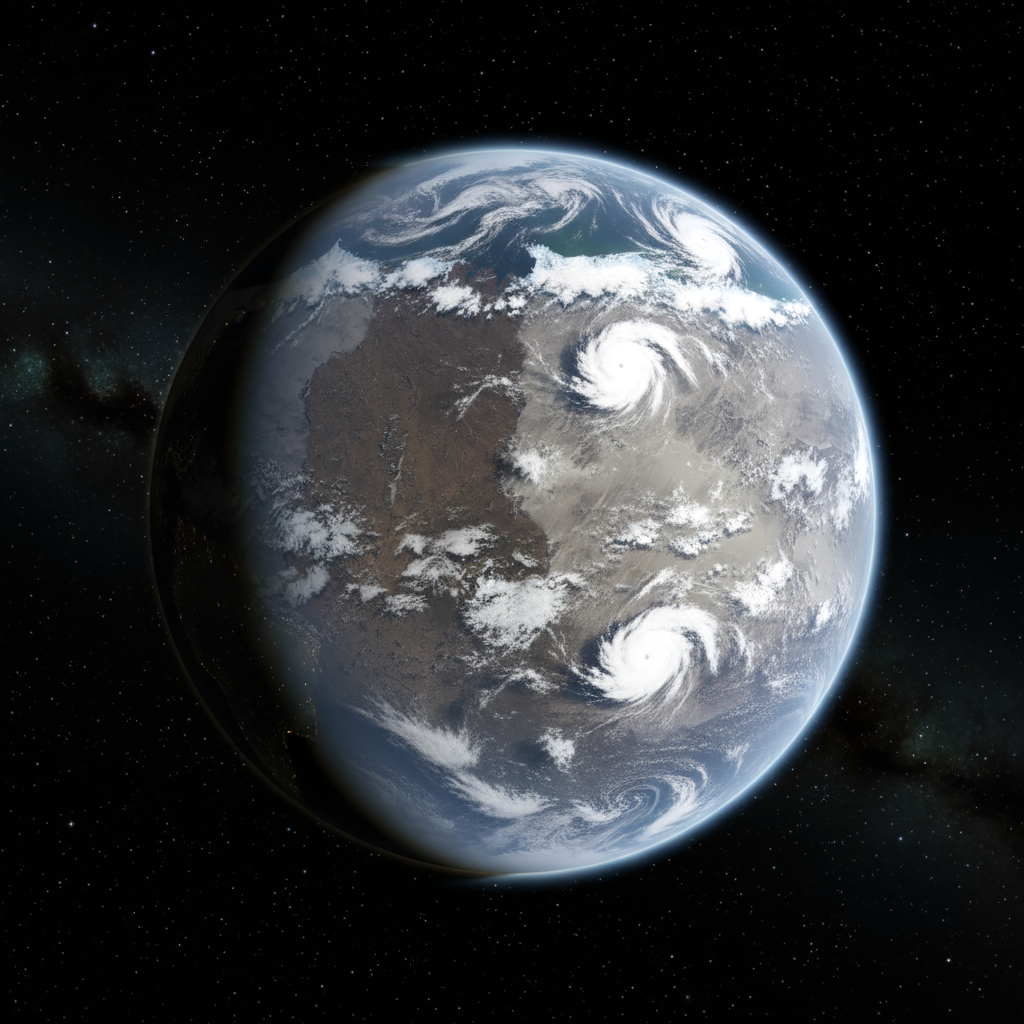
Harmony marks the European Union’s second independent colony, established in a remote sector of space. Despite its harsh conditions, it symbolizes perseverance, unity, and technological ingenuity, embodying the EU’s commitment to sustainable interstellar settlement.
Geographical and Environmental Overview
With a radius of 6,740 km and gravity of 1.16G, Harmony is a high-gravity world of deserts, plateaus, and storm-wracked continents. Its mean temperature of 264K (-9°C) and low atmospheric pressure (0.31 atm) necessitate pressurized habitats and oxygen supplementation. Water remains locked in ice reserves, spurring innovation in extraction and purification technologies.
Colonial Development
The EU’s initial colonization mission focused on building geothermal power systems, pressurized settlements, and climate-adapted infrastructure. Through perseverance and ingenuity, settlers transformed a frozen world into a functioning colony, balancing technology with human adaptability.
Population Growth
Harmony hosts 257,400 residents representing all EU member states. The population’s diversity fuels innovation, and its institutions emphasize sustainability, research, and advanced engineering. Settlement clusters combine comfort, safety, and resilience under extreme conditions.
Economy and Industry
Harmony’s economy relies on ice mining, mineral extraction, and high-tech production. Sustainable agriculture thrives within enclosed biospheres using hydroponics and aquaponics. Advanced manufacturing focuses on environmental and life-support systems, exporting vital technologies to other EU colonies.
Infrastructure and Urban Development
Most of Harmony’s cities are pressurized, energy-efficient habitats powered by geothermal energy. An automated transport network of maglev trains links habitats, mining sites, and agricultural hubs. Communication arrays ensure uninterrupted contact with other EU territories and Earth.
Culture and Society
Harmony’s settlers maintain strong European cultural unity through shared traditions, festivals, and artistic expression. Education and research are foundational, fostering a population dedicated to scientific excellence and sustainable living.
Challenges and Future Prospects
Harmony must balance growth with environmental conservation and integration within the broader EU network. Population increases will demand new innovations in sustainability, energy, and housing. Its success serves as a blueprint for future high-gravity colonies.
Conclusion
Harmony stands as a symbol of the European Union’s enduring spirit—uniting technology, cooperation, and environmental balance. Against the backdrop of a harsh and frozen world, it demonstrates humanity’s ability to adapt and thrive beyond Earth.