

Earth

Introduction
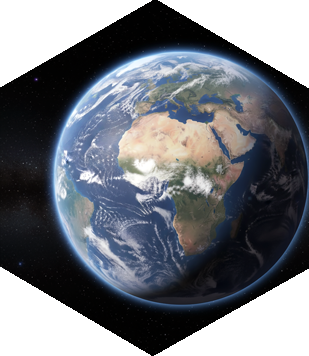
Earth — cradle of humanity and nexus of Terran civilization — remains the political, cultural, and economic heart of the known galaxy. Home to 15.8 billion people and 4 billion inorganics, Earth is the most densely populated and technologically advanced world in the Core. Despite overcrowding, ecological strain, and vast wealth inequality, it continues to shape the destiny of humankind.
Population and Society
Fifteen billion humans inhabit sprawling megacities that blanket continents, while inorganics—synthetic intelligences and robots—comprise a vital four billion more. Integration between biological and synthetic life is seamless, with inorganics performing roles from labor to governance. The human populace is split sharply between the affluent seven percent elite and the ninety-three percent working population known colloquially as the “93ers.”
Energy and Infrastructure
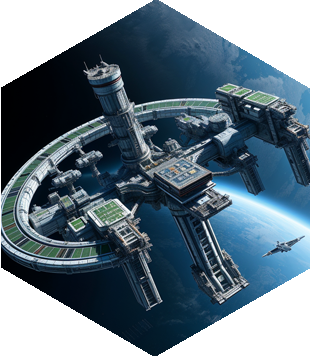
Earth’s energy network draws from orbiting solar arrays, solar wind collectors, subterranean geothermal plants, and vast stratospheric wind turbines. Most industrial and heavy manufacturing sectors were relocated off-world to lunar or orbital platforms to preserve the biosphere. Two orbital starports—Arcadia and Chrysallis—serve as Terran Core’s busiest interstellar gateways, processing thousands of vessels daily.
Political and Administrative Structure
While the Council of the Core convenes primarily on Terra Secundus, Earth remains the symbolic and administrative capital of the Terran political sphere. Ninety-eight nation-states and unions maintain their official capitals on Earth, governing through semi-autonomous structures while coordinating through interplanetary ministries. Recent decentralization initiatives have relocated many government offices to colonies to strengthen interstellar cohesion.
Technological Advancement and Economy
Earth leads the galaxy in artificial intelligence, genetic science, and advanced robotics. Life extension programs and AI-driven governance define its society. Automation has revolutionized productivity while displacing human labor, deepening the socioeconomic divide between elites and the laboring class. Nonetheless, Earth’s technological exports sustain much of the Terran Core economy.
Cultural and Social Life
Earth’s cultures are as diverse as its history. From the restored cities of Old Asia and Africa to the luminous arcologies of the Americas and Europe, ancient traditions coexist with hypermodern lifestyles. Art, cuisine, and festivals blend global influences into a unified planetary culture. However, social inequality and overpopulation persist, driving millions to emigrate to colonies seeking opportunity and freedom.
Conclusion
Earth remains humanity’s origin and anchor — both a shining beacon of civilization and a mirror of its flaws. Its cities hum with innovation and history, while its people, human and synthetic alike, continue to define the moral and cultural pulse of the galaxy.