




Sandia
Introduction
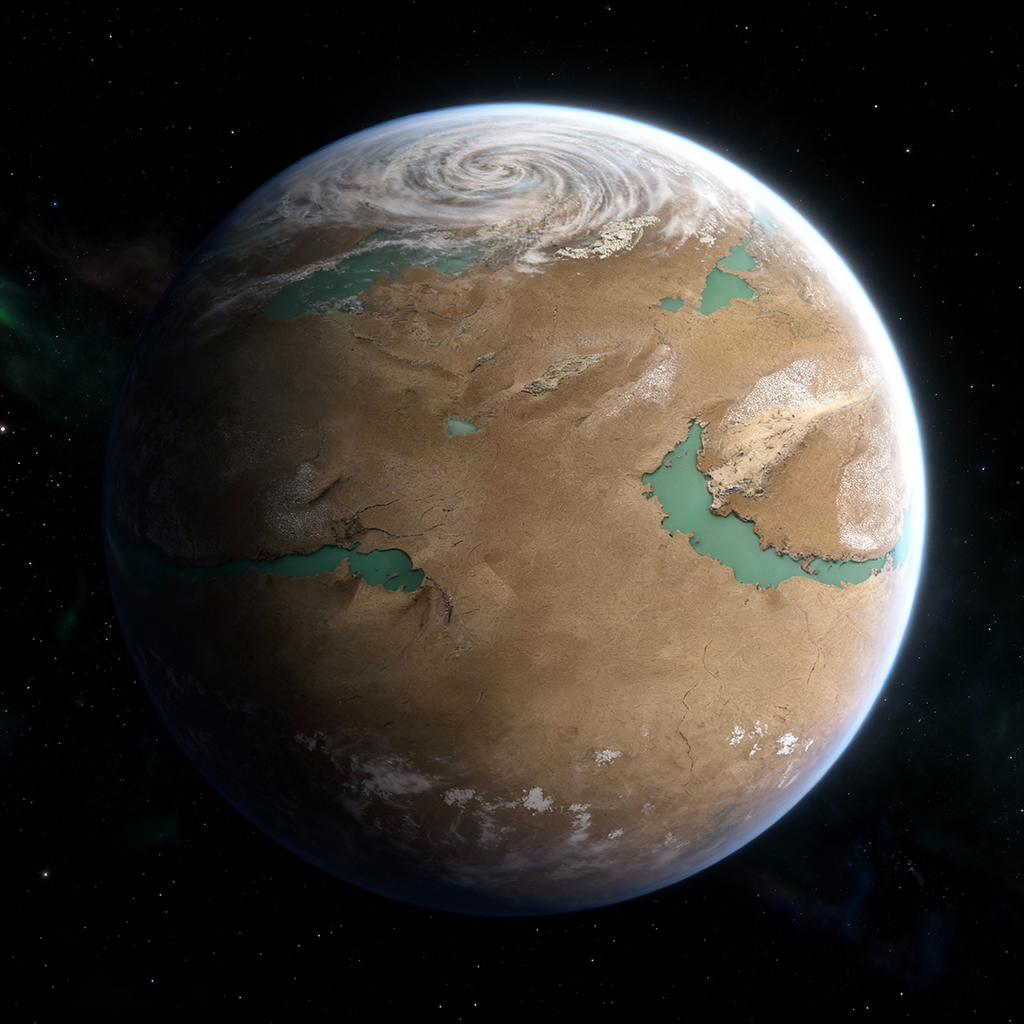
Sandia is a prominent colonial world within the vast expanse of Omnium-controlled space. As one of the many colonies that contribute to the strength and diversity of the Omnium civilization, Sandia is a planet that has harnessed its unique characteristics to support a growing population and a flourishing economy. Despite its small water index and relatively harsh environment, Sandia stands as a testament to the adaptability and resilience of the Omnium people.
Geography and Environment
Sandia is a compact but dense world, with a radius of 4,984 kilometers and a surface gravity of 1.02G. Though smaller than Earth, its mass is distributed more tightly, giving it near-identical gravity and making human settlement straightforward. The planet’s orbit is stable, though its lack of axial rotation results in long stretches of daylight and darkness, producing stark contrasts between heated sunlit regions and cooler shaded zones. This rotation pattern defines much of Sandia’s climate and settlement patterns.
The atmosphere is thick, with a surface pressure of 2.01 atm. This density moderates temperatures and protects against solar radiation, creating an environment with a mean temperature of 287K (14°C). While temperate overall, the high air pressure requires adaptation in both physiology and architecture, as structures must be reinforced and ventilation carefully managed. The denser air also contributes to dramatic storm systems that sweep across the plains, redistributing dust and reshaping the surface over time.
Water is exceedingly scarce, with only 3.53% of Sandia’s surface covered. The few major water sources exist as isolated inland seas and scattered lakes, their turquoise waters contrasting sharply against the surrounding deserts. Beneath the surface, aquifers and underground reservoirs provide additional supplies, though they are tightly controlled and managed by colonial administrations. These water pockets serve as hubs of settlement, agriculture, and trade, making them the lifeblood of human habitation on the planet.
Sandia’s landscapes are dominated by endless expanses of desert plains, broken by rocky highlands, canyons, and dust-swept basins. Native plant life is sparse but hardy, consisting of drought-resistant flora capable of storing moisture or surviving long dormancy periods. Animal life includes burrow-dwelling species that avoid the heat of the sunlit side and swift predators adapted to the open plains. These adaptations mirror the resilience required of the human colonists, who rely heavily on technology and resource management to thrive in such an unforgiving environment.
Colonization and Society
Sandia was colonized by the Omnium as part of their expansive efforts to establish a network of thriving worlds across their territory. The initial settlers faced significant challenges due to the planet's dry environment and limited natural resources. However, with determination and ingenuity, they successfully transformed Sandia into a viable colony.
Today, Sandia is home to a population of 548,700 residents. The population is spread across several major settlements, each strategically located near water sources and arable land. These settlements are connected by an extensive network of roads and maglev trains, which facilitate the movement of people and goods across the planet.
The architecture on Sandia reflects the practical needs of its inhabitants, with buildings designed to maximize energy efficiency and minimize water usage. Structures are often built into the ground or feature thick walls to insulate against the extreme temperatures that can occur during the long periods of daylight and darkness. Solar panels are a common sight, providing a reliable source of energy in the planet's sun-drenched landscape.
Economy and Industry
Sandia's economy is primarily driven by its natural resources and agricultural output. The planet's arid environment has necessitated the development of advanced agricultural techniques, including hydroponics and aquaponics, which allow for the cultivation of crops with minimal water usage. These high-efficiency farming methods produce a variety of fruits, vegetables, and grains that are not only consumed locally but also exported to other Omnium worlds.
In addition to agriculture, Sandia is known for its mineral wealth. The planet's crust contains valuable deposits of metals and minerals, which are mined and processed by local industries. These resources are crucial to the manufacturing and construction sectors, both on Sandia and throughout Omnium space.
Water management is a critical aspect of life on Sandia, and the planet has developed a robust infrastructure to collect, purify, and distribute water. Desalination plants and water recycling facilities are common, ensuring that every drop of water is used efficiently. The careful management of water resources has allowed Sandia to support its population and maintain a stable, if modest, standard of living.
Culture and Lifestyle
The people of Sandia have developed a culture that emphasizes sustainability, resourcefulness, and community. Life on Sandia requires careful planning and cooperation, and this is reflected in the strong social bonds that exist within the colonies. Residents are deeply connected to their environment, and there is a strong emphasis on conservation and the responsible use of resources.
Cultural festivals and events on Sandia often celebrate the planet's unique environment and the ingenuity of its people. These events are an opportunity for the community to come together, share knowledge, and reinforce the values that have allowed them to thrive in a challenging environment. Traditional Omnium customs are blended with local practices, creating a rich and diverse cultural tapestry.
The arts also play an important role in Sandian society. The harsh yet beautiful landscape of the planet has inspired a range of artistic expressions, from painting and sculpture to music and dance. The natural colors and textures of Sandia's environment are often reflected in the artwork created by its residents, who take pride in their ability to find beauty in their surroundings.
Challenges and Future Prospects
While Sandia has made significant progress since its colonization, the planet still faces challenges. The limited water resources and harsh climate require ongoing innovation in agriculture, water management, and energy production. Additionally, the thick atmosphere, while beneficial in some ways, can pose challenges for certain types of infrastructure and transportation.
However, the future of Sandia is bright. The Omnium government continues to invest in the planet's development, recognizing its strategic importance and the potential for further growth. Efforts are underway to explore new technologies and methods for enhancing agricultural output, improving water efficiency, and expanding the planet's industrial base.
As Sandia continues to grow and evolve, it will remain a vital part of the Omnium's colonial network, contributing to the overall strength and diversity of the civilization. Its residents, shaped by the challenges of their environment, will continue to embody the resilience and adaptability that are the hallmarks of the Omnium people.
Conclusion
Sandia is a world that exemplifies the Omnium spirit of exploration, resilience, and community. Despite the challenges posed by its arid environment and limited resources, the planet has become a thriving colony, home to a vibrant and industrious population. As Sandia continues to develop and grow, it will undoubtedly play an increasingly important role in the broader Omnium civilization, serving as a testament to the power of human ingenuity and the determination to thrive in even the most challenging environments.