




Mira
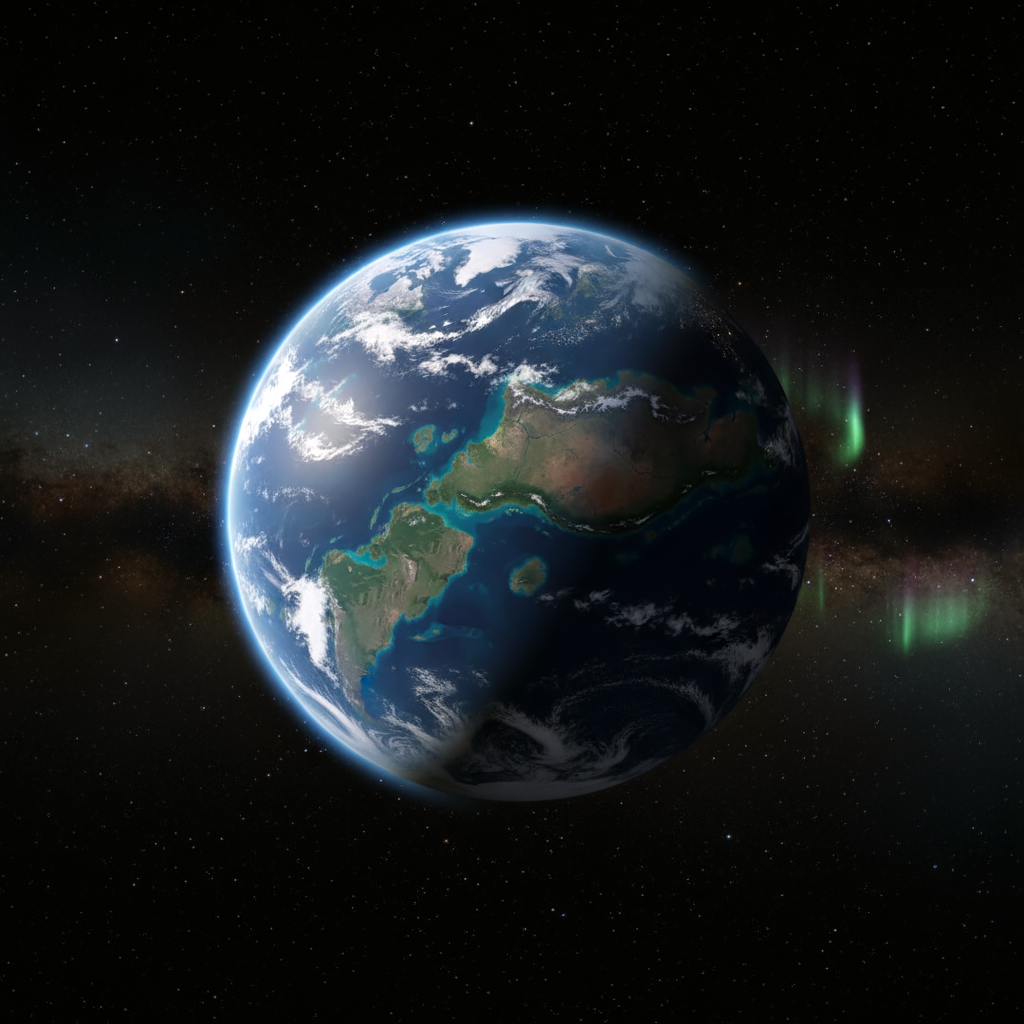
Mira: The Sister Planet to Anira
Introduction
In the Beta Canum Venaticorum system, Mira stands as the sister planet to Anira, the capital world of the Omnium. While less populated and politically influential than its twin, Mira remains indispensable to the Omnium’s balance — its agricultural heart, its maritime jewel, and its ecological refuge.
Geography and Climate
Mira is an ocean world, with 81% of its surface covered by water. Landmasses cluster in the southern hemisphere, forming two continents and several major archipelagos, while the northern hemisphere is a vast expanse of ocean. The result is a world of maritime climates and fertile coasts.
Continental Structure: The western continent is forested and temperate, with fertile valleys and vast river networks. The eastern supercontinent transitions from humid coasts to dry inland plateaus, while snow-clad mountain chains define the southern coasts. These mountains feed great rivers that nourish the farmlands below.
Climate: The planet’s mean temperature of 277 K (4 °C) belies its mild habitability, moderated by immense oceanic heat capacity. Seasonal currents generate stable weather, supporting an enormous variety of ecosystems. Storms form at equatorial convergence zones but rarely reach the devastating scale of Terran cyclones.
Habitability and Ecology
Mira’s biosphere thrives on the equilibrium between land and ocean. Fertile soils and nutrient-rich seas sustain diverse life. Vast coastal plains, river deltas, and inland lakes form the planet’s agricultural core. Ocean fisheries, coral ecosystems, and algae blooms provide both food and bioindustrial resources.
Agricultural and Economic Significance
Mira is the breadbasket of the Beta Canum Venaticorum system. Its southern continents teem with grain, fruit, and vegetable cultivation, feeding Anira and other Omnium colonies. Its moderate climate and fertile terrain allow year-round harvests, powered by irrigation networks and AI-driven agri-grids.
Farming: Vast plains sustain rotational crops and hybrid strains bred for resilience to the long day-night cycles. Vertical hydrofarms rise along city peripheries, reducing arable land strain.
Husbandry: Livestock thrive in open temperate grasslands — cattle, avian herds, and engineered species adapted to Mira’s gravity. Agricultural exports make up the planet’s primary economy, though aquaculture rivals it in scale.
Population and Culture
With a population near 57.8 million, Mira’s people cluster along the southern coasts in hybrid urban-rural cities. Each is both port and marketplace, built around the rhythm of the land and sea.
Urban Centers: Cities like Aelos and Nerath are renowned for their oceanic skylines — domed harbors, aquaponic platforms, and floating markets. Architecture favors natural light and fluid design, symbolizing harmony with nature.
Rural Communities: Inland communes emphasize self-sufficiency, faith, and tradition. Festivals revolve around harvests, migration seasons, and tides. Cultural life blends rural spirituality with cosmopolitan trade influences from Anira.
Environmental Stewardship
Omnium policy enforces strict ecological protection. The planetary administration maintains vast nature reserves, mandates crop rotation, and employs closed-loop water and soil management systems.
Water Management: Massive desalination grids sustain irrigation networks without over-drawing freshwater reserves. Ocean temperature regulation arrays monitor climate stability.
Biodiversity: Entire archipelagos are designated as sanctuaries. The coexistence of development and conservation on Mira stands as a model for Omnium terraforming ethics.
Conclusion
Mira is a world of balance — agricultural might fused with ecological harmony. Its bounty sustains the heart of the Omnium and reflects the civilization’s guiding ethos: prosperity without exploitation. The green sister of Anira remains indispensable to both the survival and spirit of the Aniran people.