




Muriel
Introduction
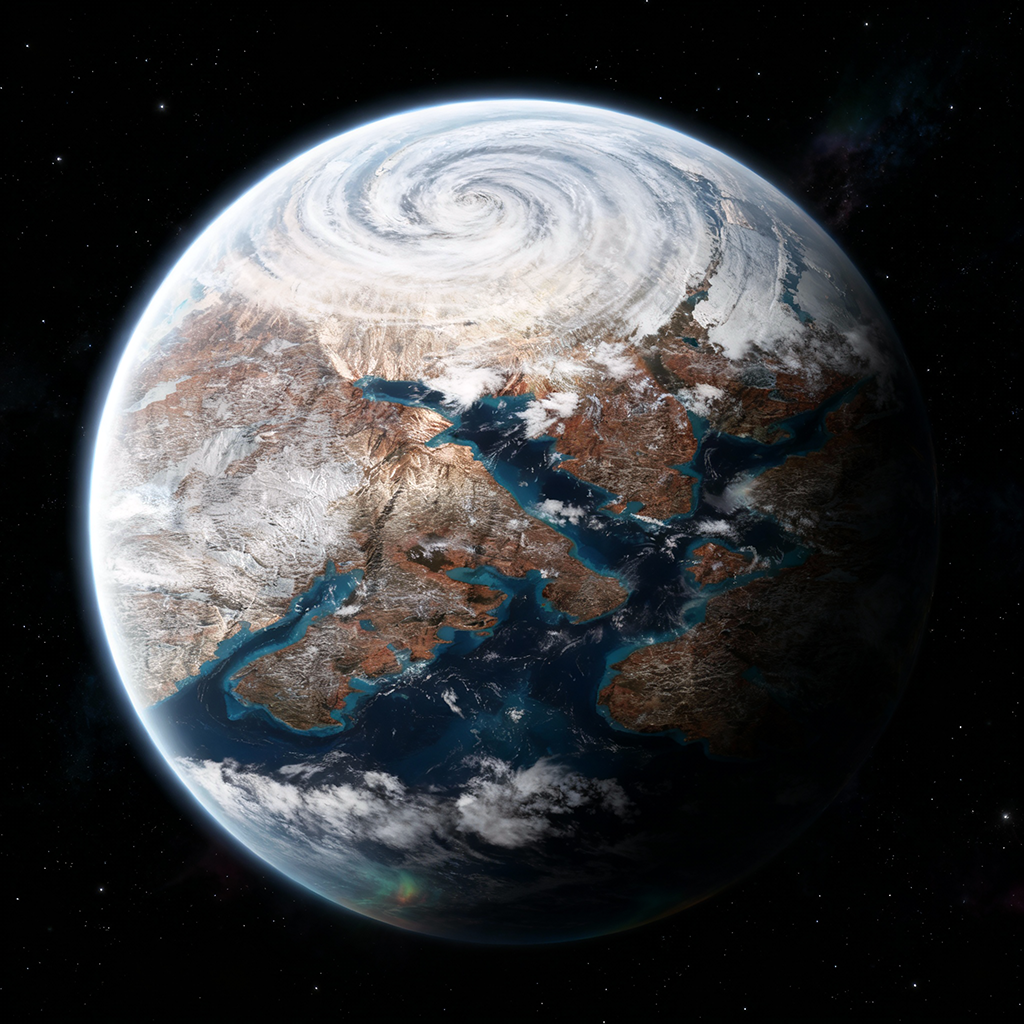
Muriel is a remote yet vital outpost within the Bootes Corridor — a frigid, tidally locked world that tests every measure of Omnium endurance. Though far from the Core, it functions as both a scientific hub and military anchor in this strategic frontier. Its cold, dense atmosphere conceals oceans of ice and subglacial life, while domed settlements cling to the narrow band of eternal twilight where survival is possible.
Geography and Environment
Muriel spans a radius of 8,833 km but maintains a relatively light gravity of 0.69G. The planet is tidally locked, its dayside trapped in perpetual light and its nightside in frozen darkness. Only the thin twilight zone supports habitation.
Mean surface temperature sits at 253K (-20°C), and the atmosphere’s density of 3.08 atm produces crushing air pressure. A Water/Ice Index of 53.5 reflects the planet’s massive glacial reserves — oceans sealed beneath kilometers of ice, warmed by geothermal currents. Constant winds sweep across the twilight coastlines, where colonies huddle beneath domes and thermal barriers.
Habitability and Settlements
Muriel hosts approximately 98,000 inhabitants — scientists, engineers, and Omnium defense personnel. The capital, Alcyone, is a domed city built on geothermal vents that power both its reactors and life-support systems. Secondary settlements are linked by subterranean maglev tunnels, avoiding the lethal surface cold.
Habitations combine industrial functionality with communal warmth. Muriel’s residents live in close quarters, fostering cooperation and solidarity. Every dome operates as a near-complete ecosystem — energy self-sufficient, water-recycling, and pressure-regulated.
Economy and Strategic Role
Muriel’s wealth lies in minerals and subglacial deposits of superconductive elements. Its refineries supply critical materials to Omnium defense and exploration programs. The world also serves as a staging ground for deep-space missions venturing beyond the Bootes Corridor.
Strategically, Muriel anchors a defensive chain guarding the outer Omnium approaches. Orbital monitoring stations track corridor traffic, while research facilities probe the biology of the sub-ice oceans. The potential discovery of native microbial life has made Muriel a nexus of exobiological study.
Culture and Adaptation
Muriel’s society is shaped by isolation and endurance. Art, music, and literature reflect cold landscapes and dim horizons — expressions of perseverance and introspection. Recreation takes place indoors: communal gatherings, light-sculpture exhibitions, and simulated sunlight rituals that help maintain psychological balance during long twilight cycles.
Challenges and Prospects
Harsh climate, isolation, and resource strain define life on Muriel. Yet its value — both strategic and scientific — ensures continual investment. Expansion plans include new geothermal colonies and research platforms over thawing sub-ice seas. Muriel will remain a cornerstone of Omnium exploration, where knowledge and necessity intertwine.
Conclusion
Muriel stands as both a frontier and a testament. It endures in perpetual twilight, a beacon of science and resolve in the Omnium’s farthest reaches. Beneath its ice and silence, life persists — fragile, disciplined, and fiercely alive.