



AstraGen Enclave

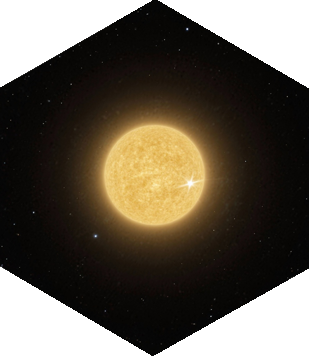
System: Ross 754
Classification: Biomedical Frontier Colony
Radius: 3,980 km | Gravity: 0.61 g | Atmosphere: Controlled (0.45 atm avg.)
Temperature: 276 K (3 °C) | Water/Ice Index: 0.31
Population: ≈ 6,800,000 | Economic Profile: Genetic research, pharmacology, biome engineering
Introduction
AstraGen Enclave is the biomedical frontier of Terran medicine—a planet of laboratories beneath domes of translucent alloy, where the boundaries between genetics and art blur. Founded by the AstraGen Consortium in the late 2200s, the world functions as both a research colony and convalescence hub, drawing patients and scientists from across the Core.
Environment and Infrastructure
Ross 754’s dim light and constant auroral storms make open-air settlement impossible. All habitation occurs under hemispheric domes that regulate light and atmospheric pressure. Gravity at 0.61 g allows large structural spans, enabling entire research cities to rise beneath single enclosures. Outside the domes, glaciers stretch toward metallic mountains rich in trace elements critical to biotech manufacturing.
Science and Society
The population is composed primarily of geneticists, clinicians, and AI-assisted researchers. Culture revolves around study and treatment; leisure and labor are indistinguishable. Genetic therapy clinics double as universities, and patients often remain to join the workforce once cured. The Enclave’s breakthroughs—clonal organ matrices, memory-repair therapies, and adaptive nanocytes—have reshaped Terran medicine.
Economy and Role
Virtually all exports are intellectual: patents, biomedical devices, and tailored DNA libraries. AstraGen maintains neutrality in Terran politics but wields immense soft power, as entire populations depend on its innovations. With limited natural resources, the colony thrives by transforming knowledge itself into currency.
Conclusion
AstraGen Enclave is less a world than a living laboratory—proof that the human body and the colony can be engineered with equal precision.