
Dar al-Salaam
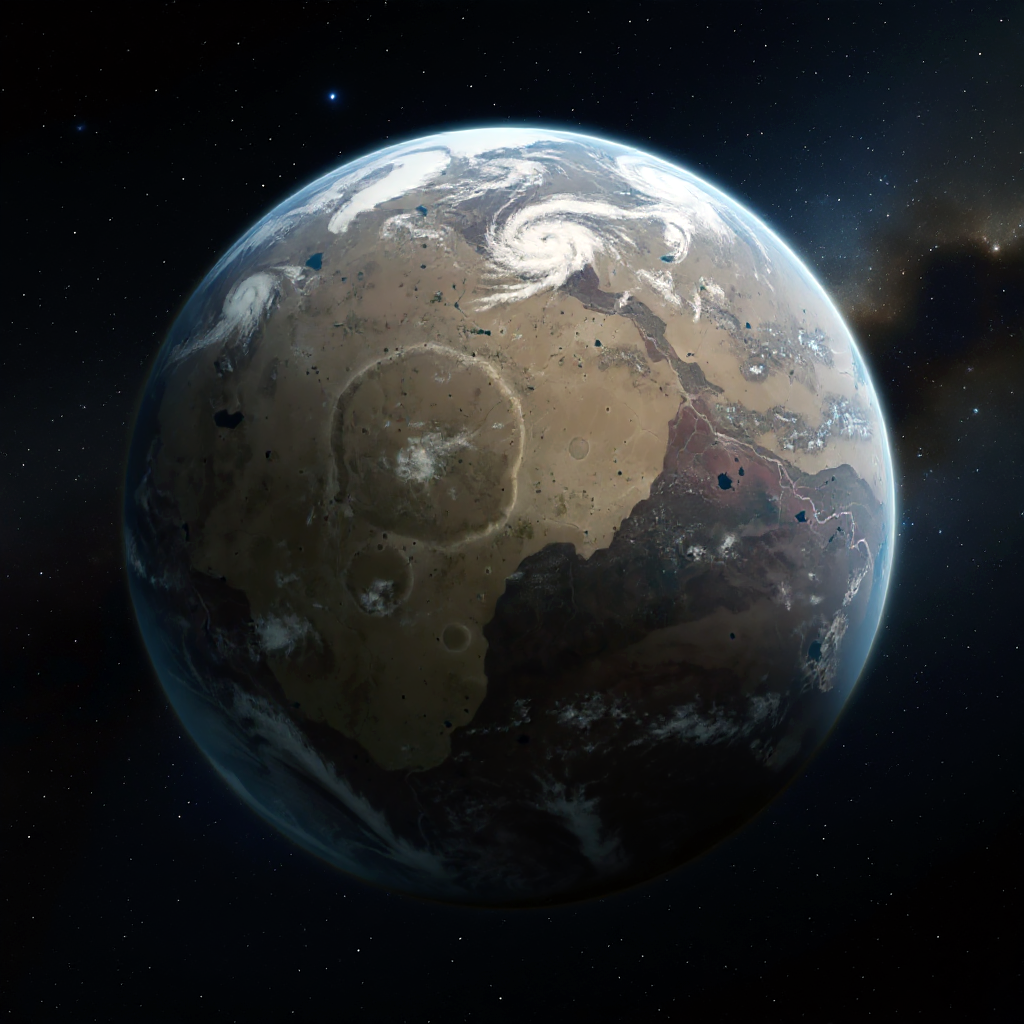
System: Gliese 908
Classification: Islamic Desert Colony
Radius: 5,102 km | Gravity: 0.74 g | Atmosphere: Dry (0.52 atm)
Temperature: 300 K (27 °C) | Water/Ice Index: 0.17
Population: ≈ 9,900,000 | Economic Profile: Hydroponics, water reclamation, trade and education
Introduction
Dar al-Salaam—“Abode of Peace”—is a triumph of faith and engineering. Founded by the Arabian League during the mid-2200s, this desert world transformed scarcity into sustainability. Under domed cities and mirrored spires, its people turned worship into endurance and science into devotion.
Environment
The planet’s ochre deserts stretch for thousands of kilometers, broken by crystalline salt flats and extinct seas. Hydroponic towers rise like minarets from within transparent domes, their interiors lush with date palms and grain crops. Solar mirrors orbit above, concentrating light into reservoirs that power water distillation plants buried deep beneath the sands.
Society and Faith
Daily life revolves around the rhythm of prayer and acts of conservation. Mosques double as civic centers; education intertwines Quranic study with planetary ecology. The population lives within a confederation of domed municipalities, each governed by a council of scholars and engineers who balance spiritual law with environmental stewardship. Pilgrimage to the Great Masjid of Salaam is among the holiest journeys in Terran Islam.
Economy and Legacy
Dar al-Salaam exports purified water, desert agriculture patents, and solar desalination arrays. Its universities train engineers and imams alike, producing some of the most respected environmental specialists in the colonies. The world has become a model for arid-zone colonization across the Core.
Conclusion
Dar al-Salaam endures as a living parable of balance—between technology and faith, scarcity and sufficiency, survival and gratitude beneath an unending sun.