
Arcadia
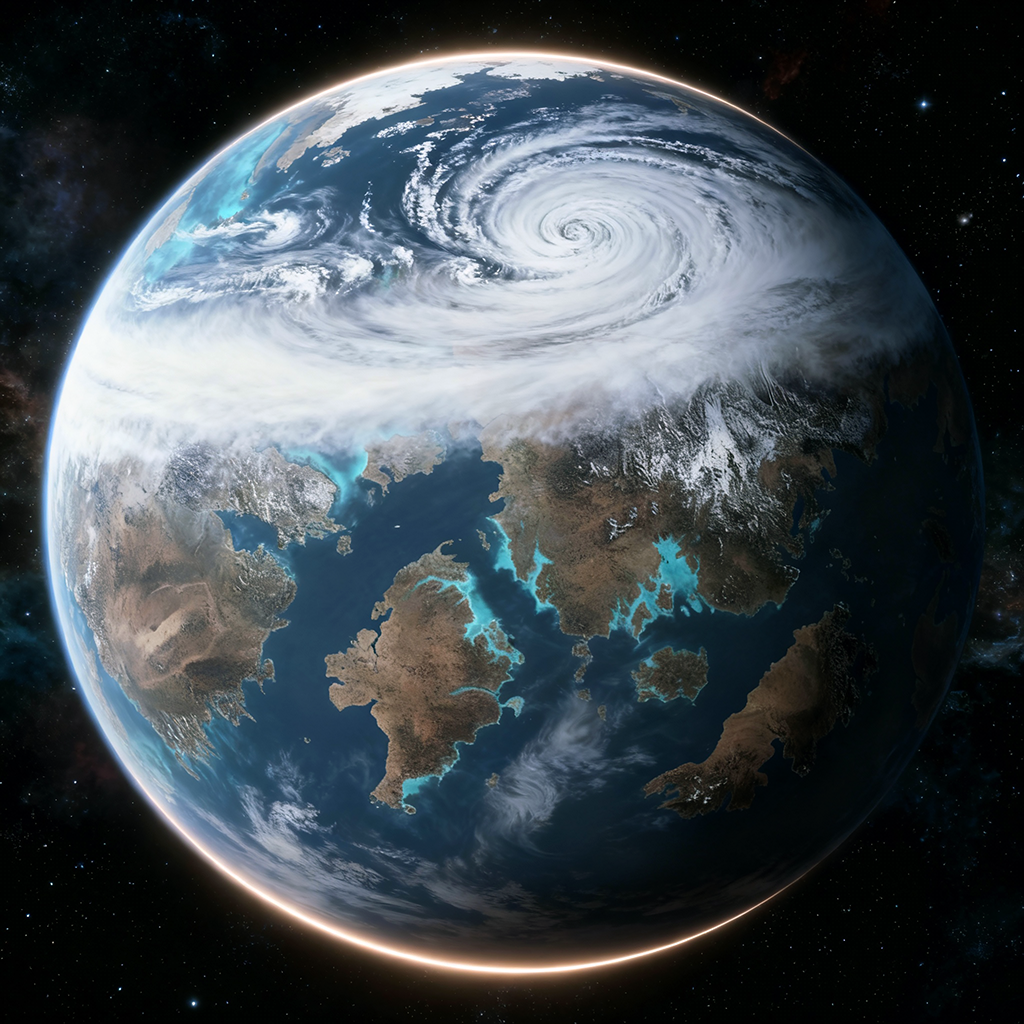
System: Lacaille 9352
Classification: Independent Socialist Commune World
Radius: 4,832 km | Gravity: 0.72 g | Atmosphere: Moderate (0.84 atm, oxygen-balanced)
Temperature: 284 K (11 °C) | Water/Ice Index: 0.48
Population: ≈ 18,600,000 | Economic Profile: Cooperative agriculture, resource sustainability, and distributed industry
Introduction
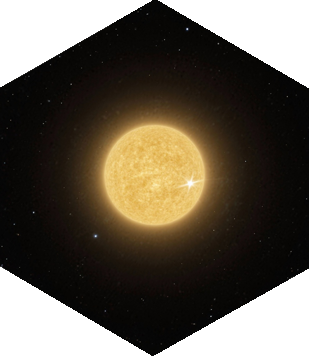
Arcadia, orbiting the red dwarf Lacaille 9352, stands as one of humanity’s most enduring experiments in egalitarian living. Founded during the early twenty-third century by a coalition of Terran social movements, Arcadia embodies the principles of shared labor, collective ownership, and direct democracy. What began as an idealistic commune on a marginal world has evolved into a self-sustaining society—one that thrives without the oversight of corporations or nation-states.
Geography and Environment
Arcadia’s surface is temperate and largely oceanic, with two major continents and a scattering of archipelagos across its equatorial belt. The world’s smaller size and lighter gravity give it a softer, dreamlike horizon, while its crimson sun bathes the surface in a perpetual warm hue. The dominant biomes range from fertile coastal plains to wind-swept grasslands and forested uplands.
Climate: The planet’s mean temperature averages around 284 K (11 °C), providing a stable, cool climate conducive to both human habitation and agriculture. Seasonal shifts are gentle, owing to the planet’s nearly circular orbit and modest axial tilt. Rainfall is abundant but predictable, sustaining wide river deltas that serve as the heartlands of Arcadian civilization.
Atmosphere and Water: Arcadia’s atmosphere is comfortably oxygen-rich, with a surface pressure of 0.84 atm. Oceans cover nearly half the surface, their deep indigo waters supporting rich microbial ecosystems introduced through careful terraforming. The Water/Ice Index of 0.48 reflects a balanced hydrological cycle, maintaining fertile soils without excessive glaciation. Terraforming completed in the mid-2200s successfully stabilized both the climate and the biosphere, ensuring the long-term sustainability of agricultural production.
Settlement and Infrastructure
Arcadia’s cities are modest in scale and deliberately decentralized. Instead of sprawling metropolises, the world’s population is distributed across hundreds of self-sufficient communes, each home to a few thousand citizens. These settlements blend agricultural production with small-scale manufacturing, ensuring that every commune maintains autonomy and redundancy.
Transportation between communes relies on magrail corridors, hydrofoil ships, and a growing network of electric aircraft. The capital commune—Eudaimon—is notable for its circular layout and communal forum, where representatives from every settlement gather for policy deliberation. The planet’s infrastructure emphasizes collective resilience: shared energy grids powered by fusion and solar, universal access to communication networks, and open data systems that maintain economic transparency.
Society and Governance
Arcadian society is founded on three central principles: equality, sustainability, and collective stewardship. Private property exists only in the form of personal effects, while land, water, and infrastructure are held in trust by local communes. Governance operates through tiered councils—local assemblies elect delegates to regional forums, which in turn coordinate planetary-scale decisions through direct voting mechanisms.
Education is universal and practical, emphasizing cooperative ethics, ecological sciences, and technological literacy. Every citizen participates in rotational labor, ensuring that the burdens and rewards of society are evenly shared. Medical care, housing, and sustenance are guaranteed rights rather than privileges. While the system requires constant participation and civic discipline, Arcadia’s citizens take pride in their self-determination, viewing their world as proof that humanity can thrive without hierarchy or exploitation.
Economy and Industry
Arcadia’s economy is non-monetary in the traditional sense. Instead of currency, it operates on an intricate system of labor credits and resource quotas managed through decentralized data cooperatives. Production focuses on meeting planetary needs rather than generating surplus wealth, though limited external trade is permitted through barter exchanges with independent traders and Terran states.
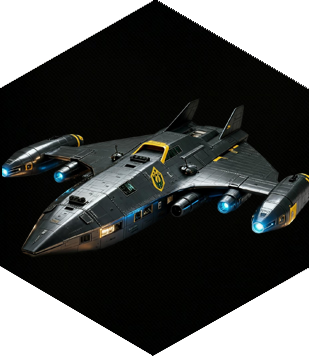
Primary industries include hydroponic agriculture, algae-based protein production, and advanced biopolymers derived from engineered flora. Light industry produces consumer goods, environmental systems, and durable tools. The planet’s cooperative shipyards maintain a small fleet of cargo and research vessels, used to exchange scientific expertise and surplus food with allied worlds. Automation exists, but never to the detriment of employment—machines serve labor, not replace it.
Culture and Daily Life
Arcadian culture prizes harmony between the individual and the community. Music, philosophy, and craftsmanship are integral to public life, and communal art festivals punctuate the year’s agricultural cycles. Architecture favors clean lines, open courtyards, and natural materials, with every settlement designed to integrate into the landscape rather than dominate it. Artificial light is warm and subdued, emulating the color of Lacaille 9352’s sunset glow.
While Arcadia’s people reject corporate and national hierarchies, they are not isolationist. Exchange missions and educational partnerships connect them to dozens of worlds across Terran and Cetian space. Arcadian literature and political thought circulate widely, inspiring communalist movements in other frontier colonies.
Challenges and Outlook
Arcadia’s independence comes at a price. Without access to vast off-world capital or corporate protection, it must rely on its own efficiency and collective will to endure. Supply shortages, ecological management, and energy balance remain constant challenges. However, its citizens embrace hardship as part of their moral duty—the living manifestation of human cooperation.
Though small compared to the power blocs of the Terran Core, Arcadia holds profound ideological influence. Its success as a self-sufficient commune continues to inspire reformists, decentralists, and humanists who see in Arcadia a living alternative to corporate domination. In the cold light of Lacaille 9352, the planet endures—quietly, deliberately, and proudly independent.
Conclusion
Arcadia stands as both experiment and symbol—a world that rejects hierarchy and thrives through unity. Its modest population, sustainable economy, and unwavering ideals have made it one of the most admired and studied independent colonies in known space. In the twilight glow of its red sun, humanity has proven that equality can be more than a dream—it can be a way of life.